Foundation
Was anything missing?
The book begins by asking whether the apostles left a complete foundation or whether later generations still needed new revelation, offices, and authority.
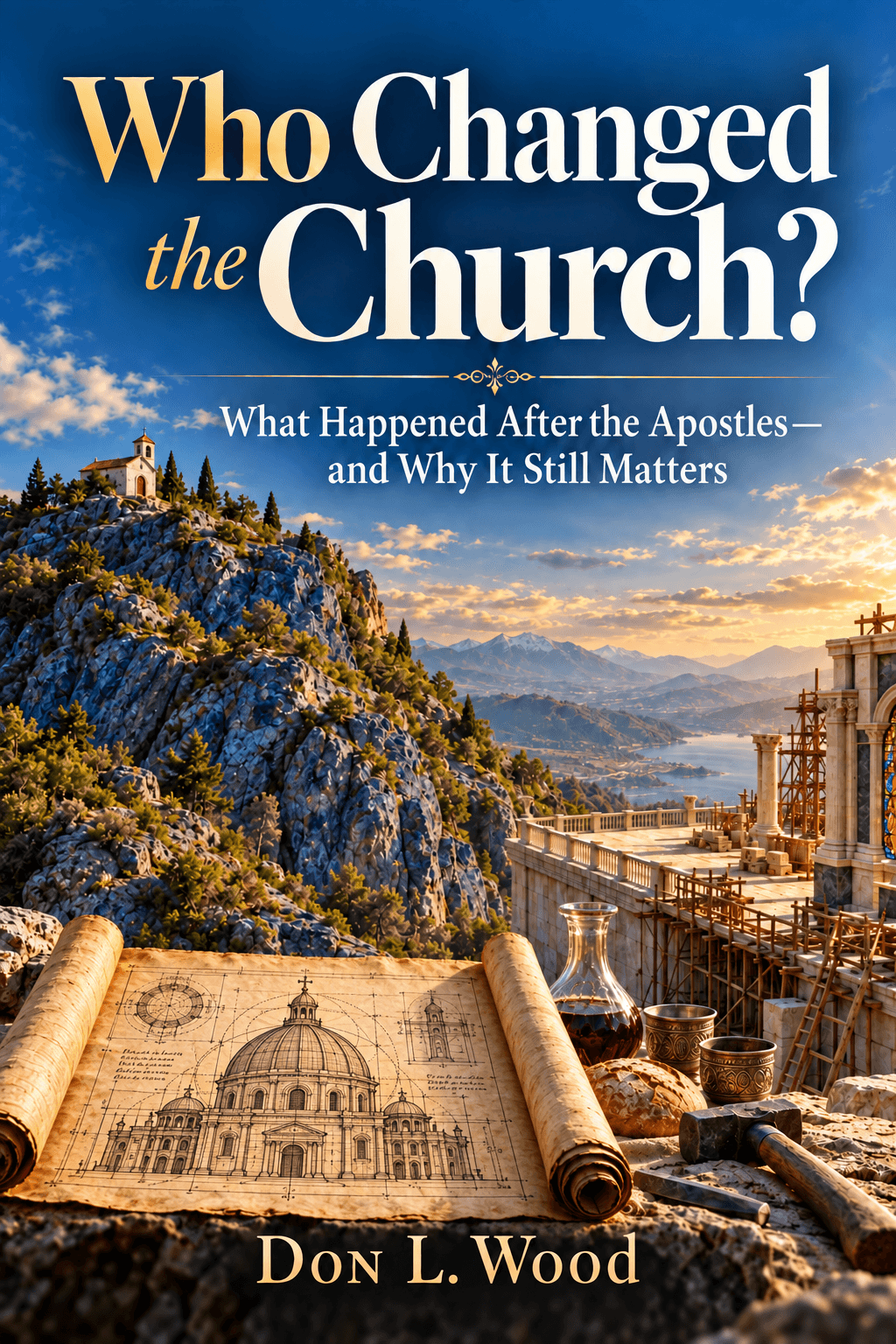
The Book by Don L. Wood
What Happened After the Apostles—
and Why It Still Matters
What if the apostles did not leave an unfinished church? What if the foundation was already laid, the faith already delivered, and the later changes can be traced?
Don L. Wood follows the evidence through Scripture, early church history, leadership, priesthood, revelation, spiritual gifts, baptism, authority, and the Blake Williams story.
Available now on Amazon
The Question at the Center
If God has already given us everything we need, what authority remains for a later foundation?
The book argues that later church structures must be measured against what the apostles actually delivered, rather than treated automatically as legitimate development.
The Cover Metaphor
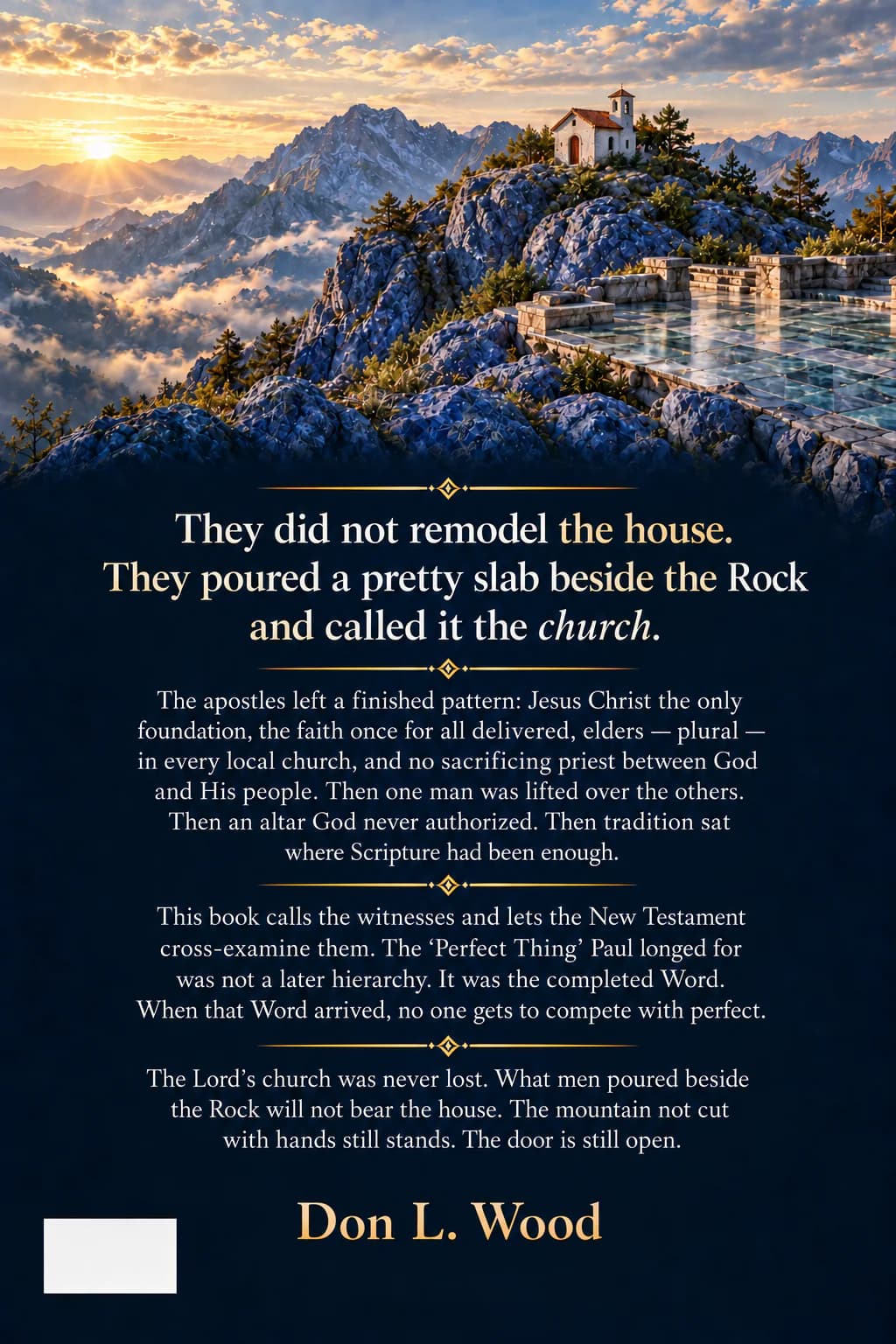
Both may be beautiful. Both may appear strong. But addition is not the same thing as foundation.
The Foundation
The book begins with what Christ and the apostles actually established.
The issue is not whether something later is beautiful. The issue is whether Christ put it there.
What You'll Investigate
Each part of the book asks the same question in a different form: what did the apostles leave, and what came later?
Foundation
The book begins by asking whether the apostles left a complete foundation or whether later generations still needed new revelation, offices, and authority.
Leadership
The New Testament pattern of plural local elders is compared with the historical emergence of a single “bishop” over them.
Priesthood
A priesthood God did not authorize.
History
Clement, Polycarp, Ignatius, Irenaeus, Tertullian, Hippolytus, and Cyprian are placed side by side with the apostolic pattern.
The Perfect
A central argument of the book connects 1 Corinthians 13 with the completion of the apostolic deposit and the purpose of miraculous gifts.
Continuity
The Blake Williams story closes the case with a prison congregation formed by men reading and attempting to follow the New Testament.
Chapter Journey
The book moves from the New Testament foundation into the first historical departures, then returns to Scripture to test what followed.
Inside the Book
01The opening question: did God leave the church complete, or still waiting for something more?
The Central Claim
The book's argument is that the temporary gifts belonged to the laying of the foundation, and that when the complete apostolic deposit arrived, the scaffolding had served its purpose.
Examine the evidence
Chapter 19
“No preachers. No tracts. No opinions. Just the Book.”
Prisoners agreed to read the New Testament without importing outside systems into the study. The congregation that followed becomes the book's final exhibit in the question of biblical continuity.
Read the Story
About the Author
The manuscript describes this book as the fruit of more than four decades of reading, rewriting, research, teaching, and ministry. Don also writes as a firsthand participant in the later Blake Williams story.
Meet DonRead the Full Case
What Happened After the Apostles—and Why It Still Matters