Scripture
Start with the text.
Every major claim begins with the passages themselves before later practice is brought into the conversation.

Scripture · History · Evidence
What happened after the apostles—
and why it still matters.
Follow the biblical pattern. Trace the historical departures. Examine the evidence for yourself.
“No one gets to compete with perfect.”
The Investigation
Start with what the apostles left. Then ask what changed, when it changed, and whether those additions belong to the original foundation.
The Beginning
Begin with the New Testament pattern before tracing what changed after the first century.
Follow the evidence →02The Departure
Follow the historical movement from plural local elders toward a different structure.
Follow the evidence →03The Question
Examine the case for a finished faith, a completed foundation, and the sufficiency of what was delivered.
Follow the evidence →Interactive Timeline
The argument is not that the church vanished. It is that later structures can be traced historically beside the pattern already present in the New Testament.
First century
The starting point is the New Testament itself: local churches, apostolic teaching, and a foundation that is not waiting for a later hierarchy to complete it.
The Cover Metaphor
Both can appear beautiful. Only one is the foundation. Explore the visual argument that runs through the book.
The Rock
The sapphire mountain represents the foundation God established: immense, finished, and able to bear the house.
Examine the Evidence
The site is being built as a research experience rather than a simple book advertisement: Scripture, historical witnesses, chronology, and primary sources connected in one place.
Scripture
Every major claim begins with the passages themselves before later practice is brought into the conversation.
History
Clement, Polycarp, Ignatius, Irenaeus, Tertullian, Hippolytus, Cyprian, and the historical record are placed on the timeline.
Evidence
The site will let readers move between New Testament language, historical development, dates, quotations, and sources.
The Blake Williams Story
“No preachers. No tracts. No opinions. Just the Book.”
Inside prison, men agreed to read the New Testament without importing a denominational system into the room. What followed became the book's living exhibit of what happens when readers ask the text itself what to believe and practice.
Read the Blake Williams story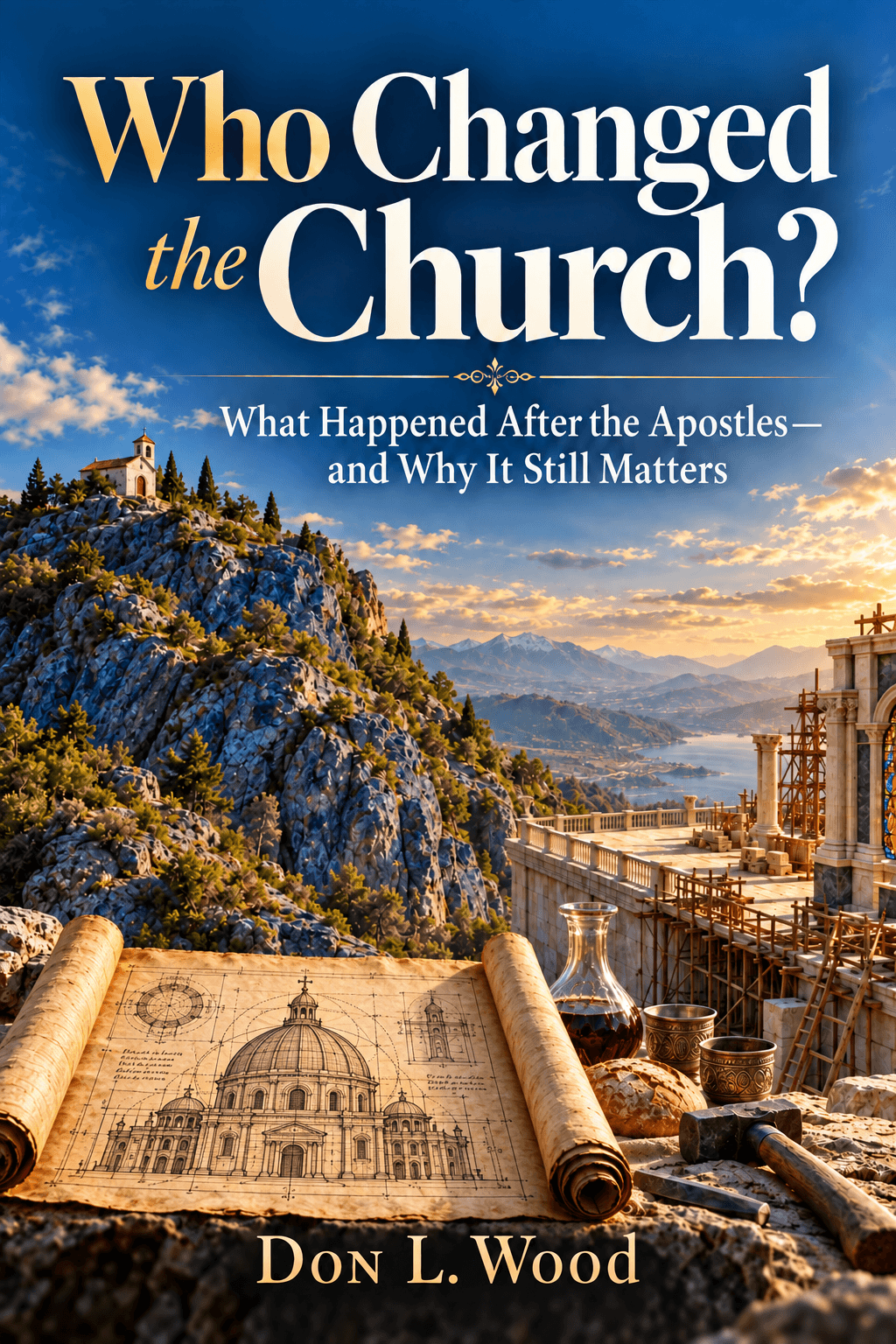
The Book
What Happened After the Apostles—and Why It Still Matters
Don L. Wood follows the New Testament foundation into the generations that followed, asking readers to compare later offices, priesthood, revelation claims, worship practices, and traditions with what the apostles actually left.

The Question Remains
Do not begin with a denomination. Begin with the foundation.